



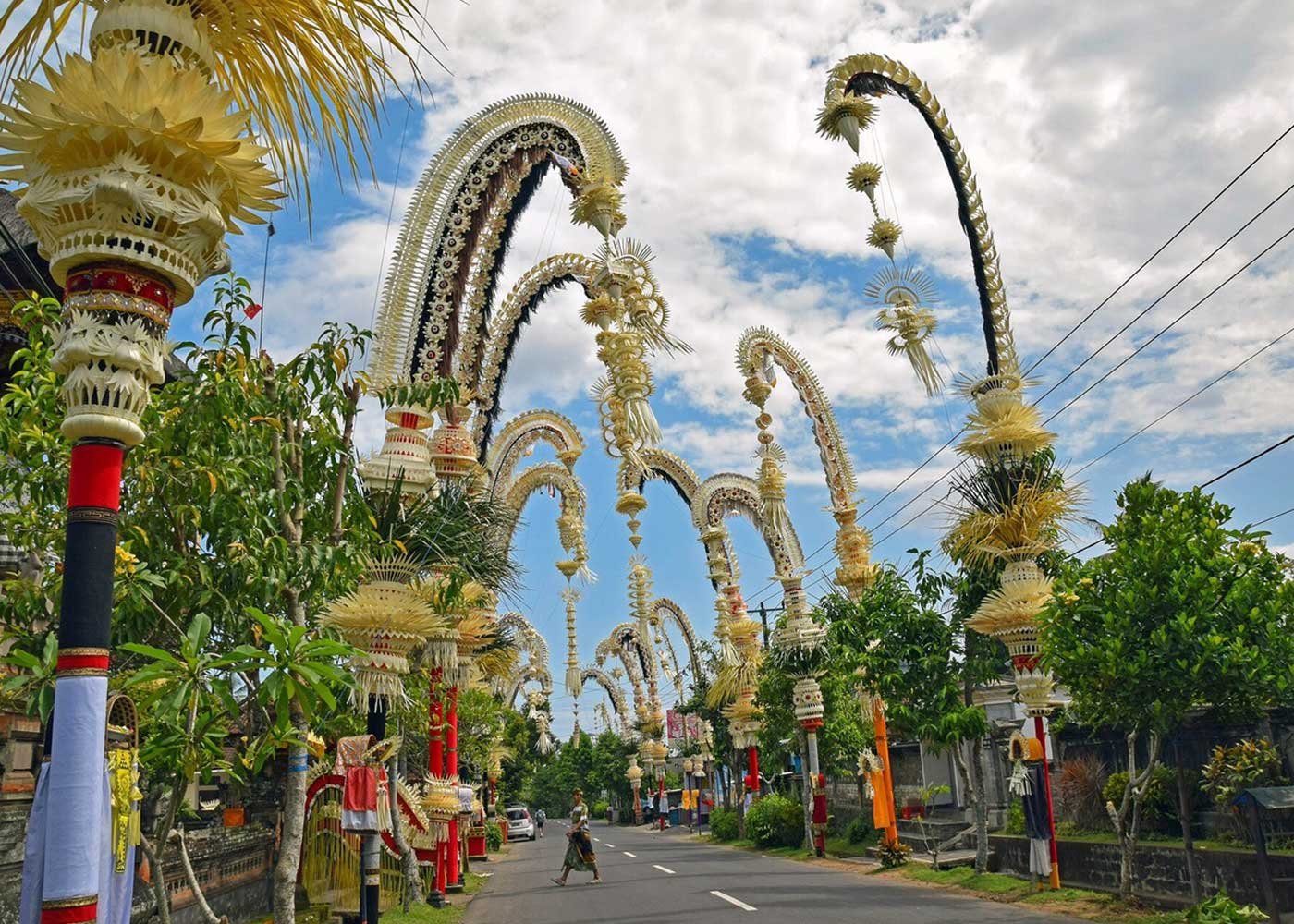
Bali’s Galungan Festival
The Galungan Festival makes it clear why Bali is frequently referred to as the “Island of the Gods.” As the people celebrate the triumph of dharma (good) over adharma (evil), every Balinese hamlet, street, and house erupts in color, devotion, and spiritual force. According to Balinese Hindu tradition, the island becomes a paradise of prayer, offerings, and joy during this season when ancestral spirits return to Earth to visit their loved ones.
The Significance of Galungan
According to the Pawukon calendar, one of the most significant holidays in the Balinese Hindu calendar is Galungan, which is observed once every 210 days. It is thought to be the time when ancestral spirits return to their earthly homes and the universe’s creator, Ida Sang Hyang Widhi, descends on Earth. Families get ready to greet these spirits with elaborate ceremonies, love, and thanks.
Penjor’s Beauty
The Penjor, which are long, elegantly curved bamboo poles exquisitely adorned with coconut leaves, fruits, and flowers, may be the most remarkable representation of Galungan. Every village’s streets are lined with these Penjors, making for an amazing scene that extends for miles. They stand for wealth and thankfulness to the gods for the abundance of the natural world.
Every Penjor is a one-of-a-kind creation made by families with love and imagination. Walking through Bali’s villages during Galungan is like entering a living art exhibit filled with symbolism and tradition.
Customs and Festivities
Galungan preparations start days in advance:
Penampahan Galungan (the eve): Families make offerings and prepare traditional foods like satay and lawar, which is a mixture of meat, veggies, and spices. Excitement and the aroma of home-cooked meals permeate the air.
On Galungan Day, people go to temples to pray while dressed in traditional Balinese clothing. To greet the visiting ancestral spirits, offerings are made in houses, family temples, and village shrines.
Ten days later, on Kuningan Day, the spirits ascend once more. At the conclusion of the celebration, prayers are held and bright yellow rice dishes are served. With blessings and thankfulness in the air, it’s a happy parting.
Bali is altered during these 10 holy days—calm yet vibrant, spiritually joyous.
Travelers’ Experience in Galungan
If you are fortunate enough to visit Bali during Galungan, you will see the pinnacle of genuine Balinese mysticism.
Locals wearing immaculate white and gold clothing swarm temples with elaborate offerings of flowers and fruit. A sense of peace and wonder that is difficult to forget is created by the rhythmic sounds of gamelan music, the aroma of incense, and the sight of penjors swaying in the tropical breeze.
Even though it’s a very religious ceremony, guests are always made to feel welcome as long as they show respect. You can participate in local celebrations, attend temple prayers (dressed appropriately in a sarong and sash), or just take in the peace and devotion that permeate the island.
The Galungan Festival is a profound manifestation of gratitude, family, and faith rather than just a celebration. Every smile, offering, and penjor emanates Bali’s spiritual essence at this intersection of the visible and invisible realms.


Comments are closed